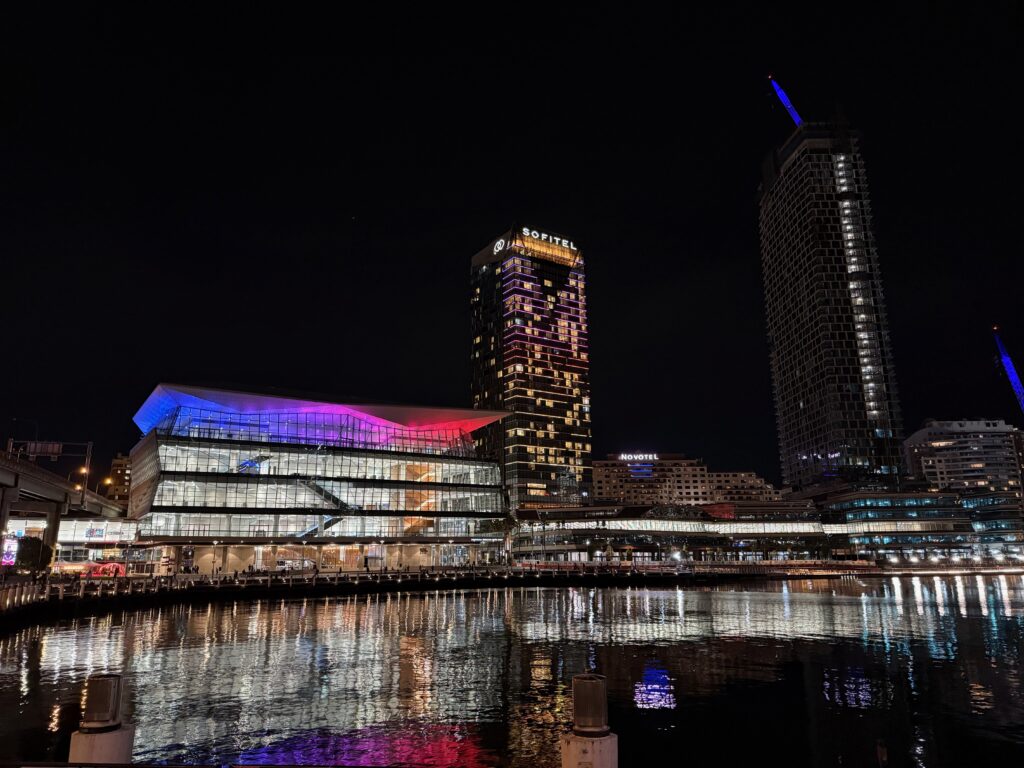
It was such a pleasure to be back in Sydney after such a long time. The last time I was there was 28 years ago. The conference was held at ICC Sydney in Darling Harbour. It was a very successful conference with over 2000 participants.
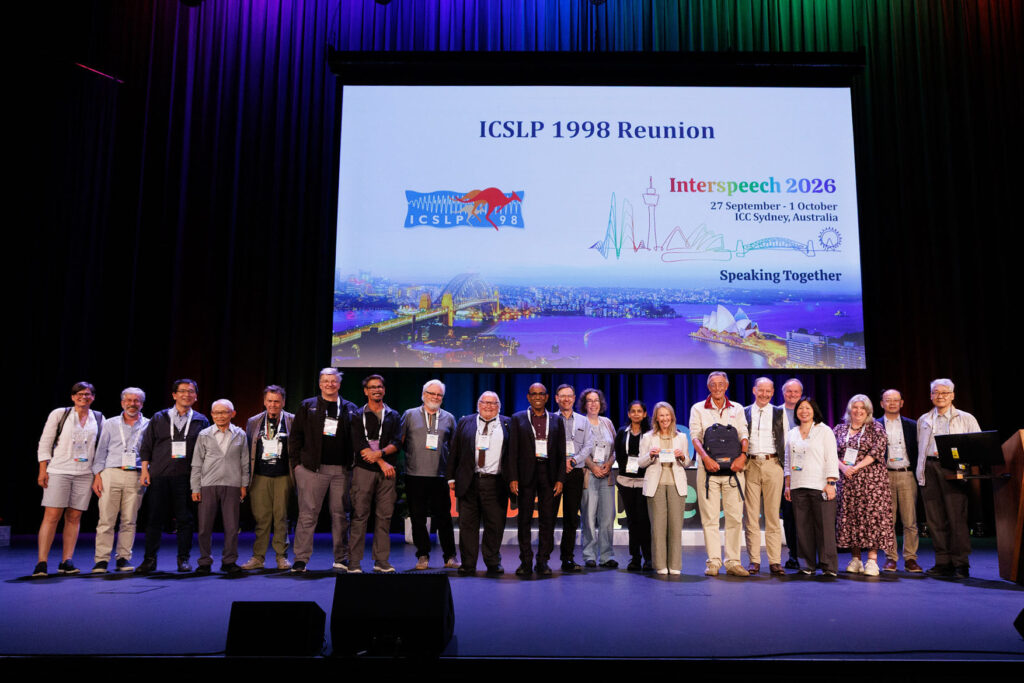
I was here as a PhD student in 1998 for the ICSLP conference, which was later merged with Eurospeech to form the current Interspeech conference. At the closing ceremony of this year’s conference, all people who were there in 1998 were asked to come up onto the stage. As you can see from the photo below, there were not that many people left. But Prof. Roger K. Moore was the only one who still had the sturdy backpack that we were given at the time.
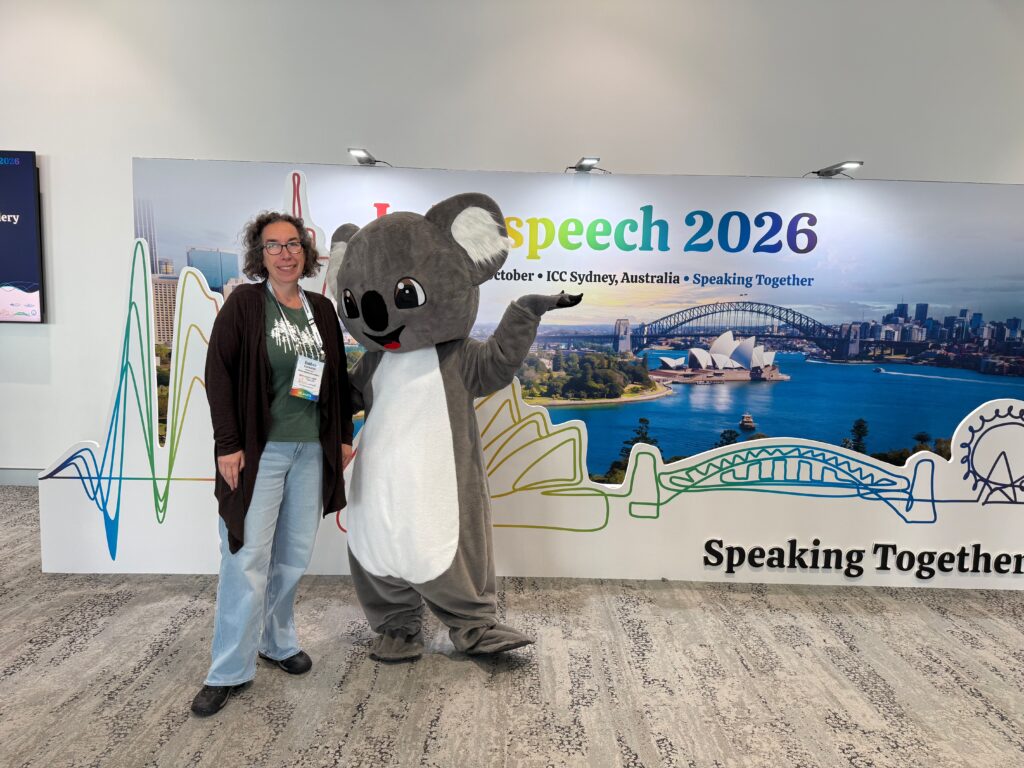
This year I was there as the Vice-President of ISCA. Besides listening to the keynotes and trying to visit many oral and poster sessions, I was busy in meetings to help future organizers of the Interspeech conference. This year’s program was impressive, not only with its sessions on state-of-the-art speech science and technology, but also with its special focus on indigenous and Pacific voices and on speech technology for speech and hearing sciences. They offered one-day registrations to invite local people to attend these sessions, which created a unique environment where people from very different backgrounds could connect. These two themes are close to my heart: they are exactly the areas I want to focus on in my own work, through speech technology for under-resourced and Indigenous languages and speech technology for speech and hearing research. This was also the first year that the program contained long-track papers, which allowed researchers to submit a longer paper and have a longer time slot for presenting it. The acceptance rate for these long papers was lower than for regular papers.
Some of the presentations I really enjoyed were:
Silmanur Akti, Alexander Waibel, “Synthesizing the Lombard effect: Multi-level control of speech clarity and vocal effort in TTS“: making synthetic speech clearer in noisy conditions, which is highly relevant for hearing research.
Gianna Leoni et al., “Indigenising speech technology: Building a TTS model for te reo Māori“: a great example of building speech technology together with a language community.
Matthew Hayden et al., “Accent-emotion entanglement in LM-based text-to-speech systems“: an important reminder to look closely at how modern TTS models handle accents.
You can find all the papers from Interspeech 2026 in the open ISCA Archive. And I am excited for next year’s Interspeech, which will be held in São Paulo, Brazil, the first time it will be held in South America.
If you are working on speech technology for under-resourced languages or for speech and hearing research, I would love to hear from you. Feel free to send me an email.
0 Comments